
- Blog
- Original
I Doubted Everything. One Thing Refused to Leave
I came to this through equations, not incense. Somewhere between Plato and Bohr I hit a wall that our best physics still quietly steps around, and it would not move.
Blog pieces — original essays and curated finds.
I came to this through equations, not incense. Somewhere between Plato and Bohr I hit a wall that our best physics still quietly steps around, and it would not move.
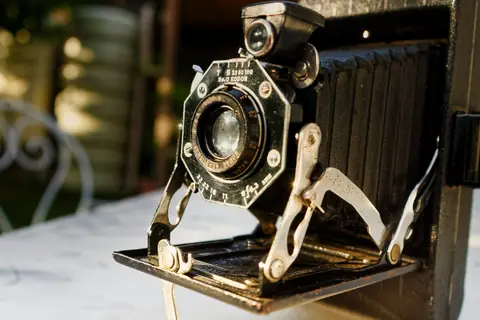
A camera can't photograph itself. Turn your attention around to catch the one doing the looking, and it has already stepped back. Gödel found the same blind spot inside mathematics.
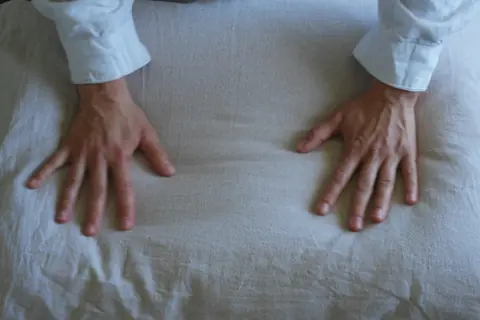
Press your hand flat on a table. It feels as solid as anything gets. Zoom in and the solidity turns into something else, and then that something else starts to disappear too.
Years of physics and philosophy pointed at one insight. When it finally landed, something in me reacted in a way no book had warned me about. The real question was who was reacting.
Every step from the Big Bang to your fingertips has a cause. Every step except one. Wittgenstein noticed it a century ago, and once you see it, it's hard to call anything ordinary again.
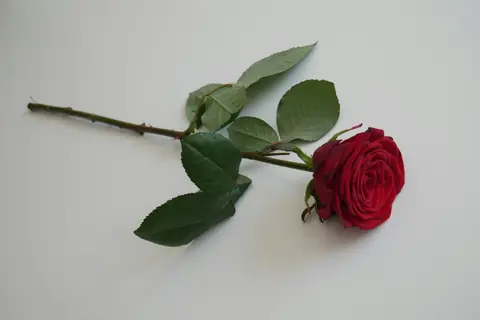
A scientist who has studied every wavelength and cone cell steps out of a black-and-white room and sees a rose. Philosophers have fought over this for decades. I think they've been fighting about the wrong thing.

I'm a Christian, and I'd read Romans 1:20 a hundred times as an argument about design. Then physics and philosophy changed the reader, and the same words started pointing somewhere else entirely.
Light from the farthest galaxies has traveled for billions of years to reach your eyes. Relativity says that from the light's side, the trip took no time at all. I couldn't stop asking what that means for the end of everything.
My hands, my brain, my thoughts. In 1739 David Hume went looking for the one all of it belongs to and kept tripping over something else. You can run the same search tonight.

Leave a rock on your desk for a year and it never changes. Cut your finger and something in you starts repairing it within minutes. In 1944 Schrödinger said life feeds on something strange, and the real difference isn't what most people guess.

Every concept in place, every quote memorized, and the suffering stayed exactly where it was. The way out wasn't one more idea. It was something the intellect can't do on your behalf.
Start at the coldest law in physics and keep asking why. You end up at computer tournaments from 1980, the strange math of cheating, and a choice nobody can force you to make.

I caught myself warmed by affection I knew wasn't sincere. It was embarrassing, and then it was a clue. If the feeling wasn't coming from them, where was it coming from?
Look closely at a chair, an electron, an empire. Heraclitus spotted it 2,500 years ago and a 20th-century inventor said it about himself. Once you see it, nothing in the room is sitting still.

The copy walks like me, talks like me and remembers my childhood. I'm certain I wouldn't see through its eyes. That certainty is stranger than it sounds, because my atoms were never fixed in the first place.

Physics can predict a billion atoms to the decimal. Pick one and ask why it decayed at that exact moment, and you hit the edge of everything we know. Einstein refused to accept what's out there.
I grew up knowing the story by heart: a garden, a snake, one forbidden tree. Read the actual words after nonduality and the fall describes something that happens to every one of us, early on, and almost nobody notices.
Invented reasons. Edited timelines. A color that isn't in the light at all. Neuroscience keeps catching the brain in the act, and every con needs an audience.
It's the shortest word in the language, a single stroke of the pen. An endless regress, Gödel and Exodus 3:14 all circle it, and once you notice what it holds, everything else starts to sound like padding.
Everything runs from order to mess, so the beginning must have been impossibly neat. But the early universe looks smooth and bland, just like the end. One force flips the whole picture.
Self-help is right: you can take charge of your mind. But every controller you find has another one standing behind it, and neuroscience only makes the line longer. Where does it stop?

I talk to AI every day. Deep in a conversation about physics, a question ambushed me. Most people ask whether a machine could ever have a mind. If consciousness is fundamental, the question turns inside out.
A city-sized rock cleared the stage for us 66 million years ago. Replay history without it and the candidates get strange: a hunter older than trees, a bird that may already be wondering about us, and a shape evolution keeps reinventing.

Two ancient claims about God look like they cancel each other out. Put them side by side and something uncomfortable falls out about the part of you that's always asking for more love.
Every neuron in your head runs on chemistry that doesn't feel a thing. Put roughly 86 billion of them together and you get the sting of cold wind on your face. Nobody can say where the feeling comes in.

Burn a book and, in principle, every word survives in the smoke. The same rule applies to the information in your brain. Whether that says anything about death depends on a question physics hasn't answered.

In 2003 a philosopher made a careful case that we might be living inside a computer. Physics says every bit of computation has a price. Following the bill leads somewhere most simulation debates never go.

In 1983 a scientist asked volunteers to flick their wrist whenever they felt like it. Their brains began preparing before they knew they had decided. Forty years later, what that measured is still being argued about.
Every major tradition says letting go of the self leads to freedom. Seen from outside, a saint and someone who has simply stopped caring can look alike. The difference is not how much they've let go.

Film a glass shattering and play it in reverse. Nearly every equation in physics accepts the reversed film as perfectly legal. You have never seen it happen, and the reason reaches all the way back to the Big Bang.
Light carries no color, and the green you see is added by your brain. One cognitive scientist argues evolution hid almost everything else too. Plato suspected as much 2,400 years ago, and the argument has a weak point.

Ask what an electron is and physics tells you only how it behaves. In the 1920s Russell and Eddington noticed the gap. Two rival theories now fill it with the same surprising ingredient, and they may be closer than they think.
Two paintbrushes and a fake hand are enough to make people react as if an object were part of their body. If ownership can be rewired that fast, the feeling of being you deserves a closer look.

Madurai, 1896. A schoolboy with nothing wrong with him was struck by the certainty that he was about to die, so he rehearsed it on the floor. He spent the next fifty years teaching what he found.
An extract from Analytic Idealism in a Nutshell that locates the Hard Problem in a quiet category error — mistaking the map of quantities for the territory of qualities.
An anesthesiologist’s careful cut between consciousness, wakefulness, and mind — why consciousness may remain even when higher mental activity goes quiet.
Essentia’s conversation around Faggin’s Irreducible — qualia in quantum fields, why consciousness cannot be computed, and symbols versus meaning.

Near-death and out-of-body reports read through analytic idealism — expansion of consciousness as dissociation softens, not as the brain shuts down.
An Essentia Foundation essay framing consciousness and the world as patterned resonance rather than inert matter.

It is cliché to say that we are living through a period of drastic historical change: every period reflects the perennial ebb and flow of history, nothing ever remaining static. But sometimes this change is extraordinary in both intensity and impact. And if any historical junction deserves such a characterisation,…

The primordial quantum language — from Federico Faggin.

Peter Jones on the metaphysics of consciousness, and on why Western metaphysics, unlike science, has struggled to eliminate hypotheses and reach consensus.

We never encounter nature outside consciousness, observes Dr. Boy van Droffelaar. Nature, as lived and known, is always already in it.

In a short, accessible essay, Karina Firme uses an idealist metaphysics to explain why integrating the rejected parts of our own personalities quietens the world.
Rupert has asked me to publish his rejoinder to the previous post in this blog, wherein I defended myself against his attack on Analytic Idealism . Here is his response, in the form of a letter, in full and unedited. I've added a link to it from my previous post. Dear Bernardo, I regret the tone of my remarks in my…
06-Dec-2024 update: Rupert's rejoinder to the response below has now been published and can be found here . Over the past several days, multiple people have commented in my blog and social media spaces about criticisms of Analytic Idealism made by Dr. Rupert Sheldrake in the Theories of Everything podcast/YouTube…

Believing the right thing—the right theory, idea, or principle—for the wrong reasons can sometimes be as bad, or even worse, than believing the wrong thing. The right belief for the wrong reasons is never truly transformative, never really sinks into the core of our being, and may even create cognitive dissonances…
Philosophers of mind talk much about the so-called 'Hard Problem of Consciousness.' But is it a real, objective problem to be solved, or just the subjective reflection of a confused way of thinking? And in the latter case, where and how, precisely, does the problem arise? In this essay, you will be surprised at how…