
- Blog
- Original
- Science
- Biology & Evolution
Stars Build Order. So Do Hurricanes. Why Aren't They Alive?
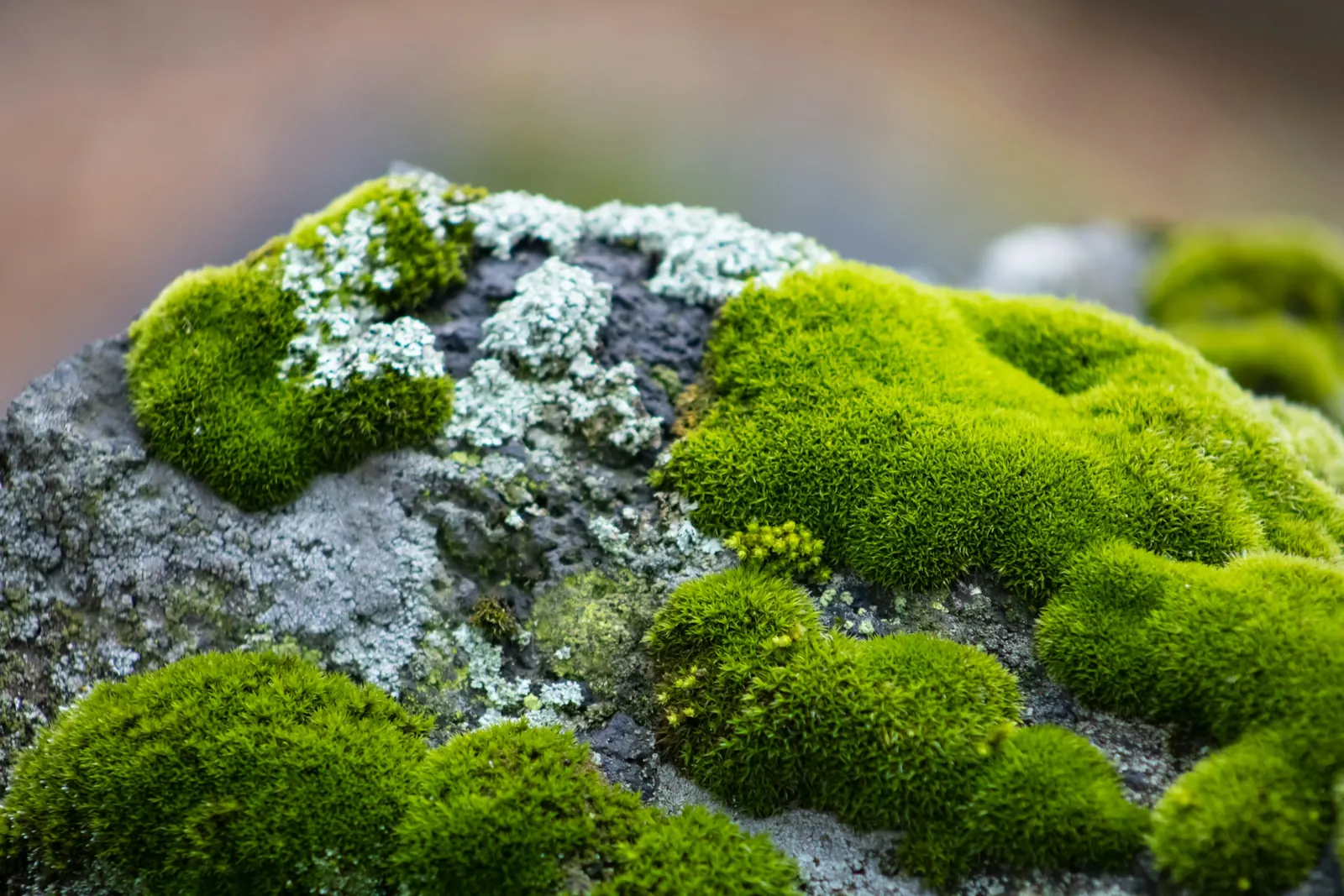
Leave a rock on your desk for a year and it never changes. Cut your finger and something in you starts repairing it within minutes. In 1944 Schrödinger said life feeds on something strange, and the real difference isn't what most people guess.
"What an organism feeds upon is negative entropy."
— Erwin Schrödinger, What Is Life? (1944)
Leave a rock on your desk for a year and it will still be a rock. Leave a houseplant there without water for a year and it will be a brown crumble. You are far more like the plant, and that is stranger than it sounds.
The living thing is vastly more sophisticated than the rock, yet it is the one that falls apart without constant help. The rock just sits there being a rock, without effort.
That contrast sent me into a long investigation of entropy, and I came out of it seeing life very differently. Here is the same route: first why life seems to run uphill, then why stars and hurricanes seem to do the same, and then the specific things that separate a living thing from both.
The Universe Runs Downhill
First, the background. The second law of thermodynamics says that in a closed system, entropy tends to increase. Entropy is roughly disorder, or more precisely the number of ways the parts can be arranged without changing the big picture. Hot coffee cools. Ice melts. Sandcastles wash away. Things run downhill.
Life looks as if it is running uphill. A cell takes in a messy mixture of molecules and builds exquisitely ordered structures from them: proteins, membranes, DNA. Organisms grow, repair and reproduce. It seems to be fighting the second law.
It isn't. Life is an open system. It takes in high-quality energy, such as sunlight or food, and releases lower-quality energy and waste, such as heat and carbon dioxide, into its surroundings. The order inside is paid for by more disorder outside, and the total still goes up. Schrödinger put it memorably in his 1943 Dublin lectures, published the next year: an organism feeds on "negative entropy." It keeps itself organized by exporting disorder.
But Stars Do That Too
That is where I got stuck. My question was simple:
"Why is a star taking basic ingredients and using the laws of physics to create a seemingly ordered state, any different from life?"
A star pulls a diffuse cloud of gas into a dense, structured ball. It forges heavier elements in its core. It radiates energy into space. It is an open system with energy flowing through it, and it creates local order.
Hurricanes do something similar. So do convection cells in a pot of soup, and crystals forming from solution. Nature is full of structures that appear when energy flows through matter. Scientists call some of these dissipative structures, and the chemist Ilya Prigogine won the 1977 Nobel Prize in Chemistry largely for showing how order can arise spontaneously in systems far from equilibrium.
So what makes life special? If it is only "order maintained by energy flow," then a hurricane is alive.
The Difference Is Memory and Repair
The more I looked, the clearer the distinction became. It is not about order alone. It is about a few things a star or a hurricane does not do.
Life stores information about how to rebuild itself. A hurricane forms when conditions are right and dies when they aren't. It carries no instructions. A cell carries a genetic record that lets it rebuild its parts, and its descendants' parts, again and again.
Life repairs itself. If you disrupt a hurricane, it does not heal. Cut your finger, and within minutes platelets gather and a clot begins to form, the first step in a coordinated repair.
Life keeps itself within a range. Your body holds its core temperature near 37 °C, and keeps its blood chemistry and many other variables steady while the world around it changes. Biologists call this homeostasis. A star simply follows the physics; when its fuel changes, it changes.
Life acts as if it has goals. This is where the work of biologists such as Michael Levin interests me most. Even groups of cells seem to work toward target shapes, rebuilding the right structure after injury, as though they "know" what they are aiming for.
Why Bother?
My next question was the obvious one:
"So why did life develop and evolve to do this and why was it beneficial vs a rock?"
The honest answer is that "beneficial" only makes sense once you have something that copies itself. Before that, there is no winner or loser, only chemistry. But once a chemical system appears that can make copies of itself, even badly, the copies that hold together a little longer and harvest energy a little better leave more copies. Over billions of years, that ratchet produced everything from bacteria to us.
A rock does not need to do any of this, because it is not trying to persist as a pattern. It persists by being stuck: its atoms are locked in a low-energy arrangement, close to equilibrium. Life persists in the opposite way, by never letting itself settle.
How the first self-copying system arose is still one of the great open questions in science. Nobody has a complete answer yet.
Life Is a Verb
This changed my picture of myself.
I used to think of my body as a thing. Now I see it more like a whirlpool in a river. The water flowing through a whirlpool is always different; the whirlpool is a pattern, not a substance. Most of the atoms in your body are replaced over time, yet you persist. You are a shape that matter keeps flowing through.
The rock is a noun. Life is a verb.
I find that deeply moving. Every moment you are alive, an enormous amount of activity goes on just to keep you being you: repair, regulation, exchange and rebuilding. The rock gets to rest. You never do.
The Effort Behind Staying the Same
There is a quiet lesson in that for ordinary life. We tend to think of staying the same as the default and change as the effort. For living things it is the reverse. Change, decay and dissolution are the default. Staying recognizably yourself takes constant, invisible work.
So the next time you feel that nothing is happening, think of your heartbeat, your temperature holding steady and a cut quietly closing. A rock never does any of that work. Your body does it every second, and that work is what being alive means.
Like and share
Keep Reading
- Blog
- Original
If the Asteroid Had Missed, Who Would Be Reading This?
A city-sized rock cleared the stage for us 66 million years ago. Replay history without it and the candidates get strange: a hunter older than trees, a bird that may already be wondering about us, and a shape evolution keeps reinventing.
- Blog
- Original
I Doubted Everything. One Thing Refused to Leave
I came to this through equations, not incense. Somewhere between Plato and Bohr I hit a wall that our best physics still quietly steps around, and it would not move.
- Blog
- Original
You Have Never Touched Anything. Not Once
Press your hand flat on a table. It feels as solid as anything gets. Zoom in and the solidity turns into something else, and then that something else starts to disappear too.
Join the discussion
Comments