
- Blog
- Original
- Science
- Science Meets Nonduality
I Doubted Everything. One Thing Refused to Leave
I came to this through equations, not incense. Somewhere between Plato and Bohr I hit a wall that our best physics still quietly steps around, and it would not move.
Part of The Scientist's Road to Nonduality
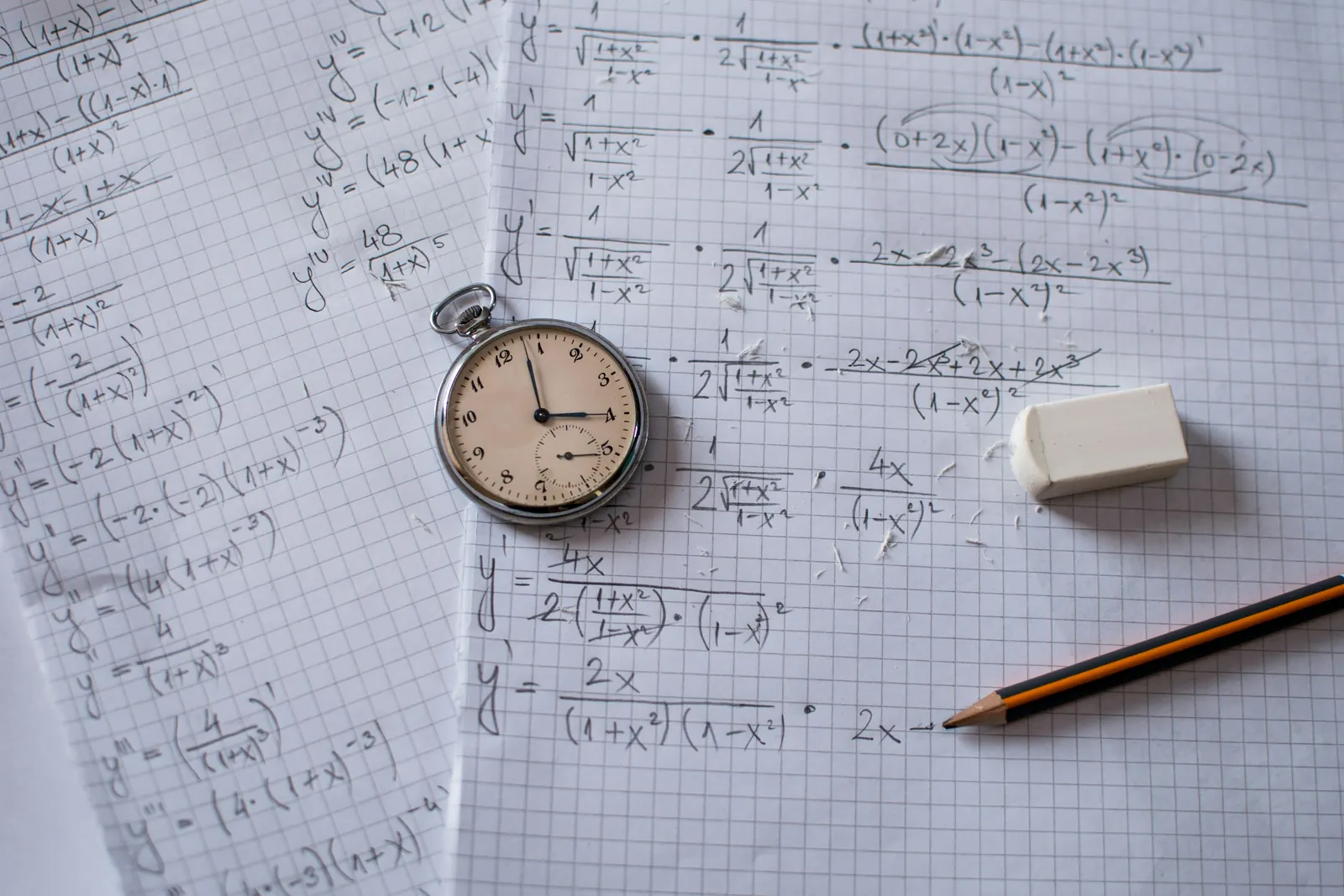
"I regard consciousness as fundamental. I regard matter as derivative from consciousness."
— Max Planck
Try to doubt everything you know, and keep going for longer than feels reasonable.
Your senses can be fooled. Your memories can be edited. Your teachers can be wrong, and so can your best theories. For a long time I assumed that if you pushed this far enough, nothing at all would be left standing. I was wrong about that, and the way I found out had nothing to do with incense or retreats. I came to it through equations.
For most of my life I was a science guy to the bone. If you had asked me what reality was, I would have told you it was particles and fields obeying laws, and that one day physics would write those laws down on a single page. I was Team Einstein. Determinism felt clean. The idea that the universe rolls dice at its foundation struck me as a failure of nerve.
This is the story of how that worldview came apart. Nobody argued me out of it. I simply kept following it honestly, one layer at a time, until it ran out of road. The layers came in order: sound, mathematics, color, quantum mechanics, and finally the one question about doubt that I could not get past.
The Tree That Doesn't Make a Sound
It began with a question I would once have called childish. If a creature is deaf, is sound something it is missing, or is sound the product of a particular kind of consciousness?
Physics has a clear answer for the mechanism. Pressure waves move through the air at roughly 343 metres per second. But the mechanism is not the sound. The sound, the actual experienced quality of a bell or a voice, is not in the air. The waves are there. The sound happens somewhere else.
That was when the old riddle landed for me. If a tree falls and no one is around, it makes pressure waves. It does not make a sound. And that was the first time I really understood what philosophers mean by the hard problem of consciousness: why is there something it is like to be anything at all? Why isn't all this physics simply happening in the dark?
Falling in Love With a Mathematical Universe
My first escape route was mathematics. I have always been more of a mathematician than a physicist in temperament, and Max Tegmark's mathematical universe hypothesis felt like home. Reality is not merely described by mathematics; reality is mathematics. It is clean, it is objective, and it scratches the itch for certainty.
Then I read a comment online that rearranged everything. It suggested that perhaps the two real things are mathematics and the conscious agents navigating it. For the first time, an argument for putting consciousness at the foundation made sense to someone with strong physics beliefs. And once something sat alongside the mathematics, the mathematics could no longer be the bedrock. Something had to ground both.
Plato Gets the Last Laugh
Qualia are what finally drove the point home. The redness of red. The taste of coffee. The sound of a symphony. I tried every way I could think of to reduce these to something else, and they would not go. Red is a brute fact in the same way the number 2 is a brute fact. You can describe the wavelength forever, around 620 to 750 nanometres, and you will never arrive at the red.
Which meant, uncomfortably, that some version of Plato was right. There had to be a realm, or a dimension of reality, where these qualities live, because they are certainly not in the equations. I remember a genuine jolt of surprise. A man 2,400 years ago had pointed at something our most complete physical theories still quietly step around.
I Was Wrong About Bohr
For years Niels Bohr was my least favorite figure in the history of quantum mechanics. I saw him as the man who told everyone to stop asking questions, while Einstein was the rebel insisting there must be something deterministic underneath.
Once I took seriously the idea that experience, or agency, might come first, Bohr's position snapped into focus. He was not shutting down inquiry. He was admitting something quantum mechanics had dragged into the open: physics had always had the observer at its center, only hidden in the background. Relativity is built on observers and their frames. Quantum mechanics simply made the observer impossible to ignore.
I wrote this down at the time, and I still feel it:
"Crazy how I used to be adamantly Einstein with the god does not play dice ideology, only to find out that Bohr was completely correct!"
It was humbling. What had blinded me was not a lack of intelligence. It was an unexamined assumption that matter came first and everything else had to be squeezed out of it.
The Wall That Wouldn't Move
Here is what I think happens to many people who end up where I did. We are natural skeptics. We doubt our senses, our theories, our teachers, the external world. And if you keep doubting, you eventually reach one thing that cannot be doubted, because the act of doubting it is already an instance of it.
Descartes found it nearly four centuries ago. I think, therefore I am. Or, stripped down further: experience is happening. That is the only thing I have ever been certain of.
As I put it once:
"after doubting all else the absolute unshakeable wall they hit (same way it happened for me) is the cogito/consciousness."
Once you see that the one thing surviving all doubt cannot be derived from anything else, and does not provably depend on anything else, the argument becomes almost embarrassingly simple. There is no such thing as strong emergence; you cannot get experience out of things that have none. So consciousness is fundamental. And "matter" turns out to be what models look like from the inside of consciousness: useful, lawful, extraordinarily precise, but models.
Past the Quantum Floor
What I did not know, all the way through this, was where the road ended. I had never heard of Advaita. I did not know the word "nondual." I was simply following the logic down through physics, through the quantum floor, past the hard problem, into the question of what grounds the ground.
What was waiting there was the oldest answer there is. There aren't two things. Not mind and matter. Not observer and observed. Not a "me" in here looking at a world out there. Just one reality, aware.
The funny part is that I got there by brute force. Mystics got there by sitting quietly. I got there by refusing to stop asking "but what is that made of?" until the question turned around and pointed at the one asking it.
What I'd Tell My Old Self
I would not tell him he was wrong to love physics. Physics is the most beautiful map humanity has ever drawn, and it brought me here. I would only tell him that a map, however perfect, is still drawn by someone, and that the someone was never on it.
Science asks what everything is made of. Nonduality asks who is asking. I spent years thinking those were different questions. They turned out to be the same question, seen from two ends.
If you are a skeptic reading this, I am not asking you to believe anything. I am asking you to doubt one step further than you are comfortable with, and then check honestly whether the fact of experience itself is something you can doubt.
Like and share
Keep Reading
- Blog
- Original
Nobody Has Ever Seen a Thing. Including You
Look closely at a chair, an electron, an empire. Heraclitus spotted it 2,500 years ago and a 20th-century inventor said it about himself. Once you see it, nothing in the room is sitting still.

- Blog
- Original
If This Is a Simulation, Someone Is Paying the Electric Bill
In 2003 a philosopher made a careful case that we might be living inside a computer. Physics says every bit of computation has a price. Following the bill leads somewhere most simulation debates never go.
- Blog
- Original
You Have Never Touched Anything. Not Once
Press your hand flat on a table. It feels as solid as anything gets. Zoom in and the solidity turns into something else, and then that something else starts to disappear too.
Join the discussion
Comments