
- Blog
- Original
- Philosophy
- Consciousness & the Hard Problem
That Tree Outside Your Window Might Not Look Anything Like a Tree
Light carries no color, and the green you see is added by your brain. One cognitive scientist argues evolution hid almost everything else too. Plato suspected as much 2,400 years ago, and the argument has a weak point.
"To them, I said, the truth would be literally nothing but the shadows of the images."
— Plato, Republic, Book VII (c. 375 BC), trans. Benjamin Jowett
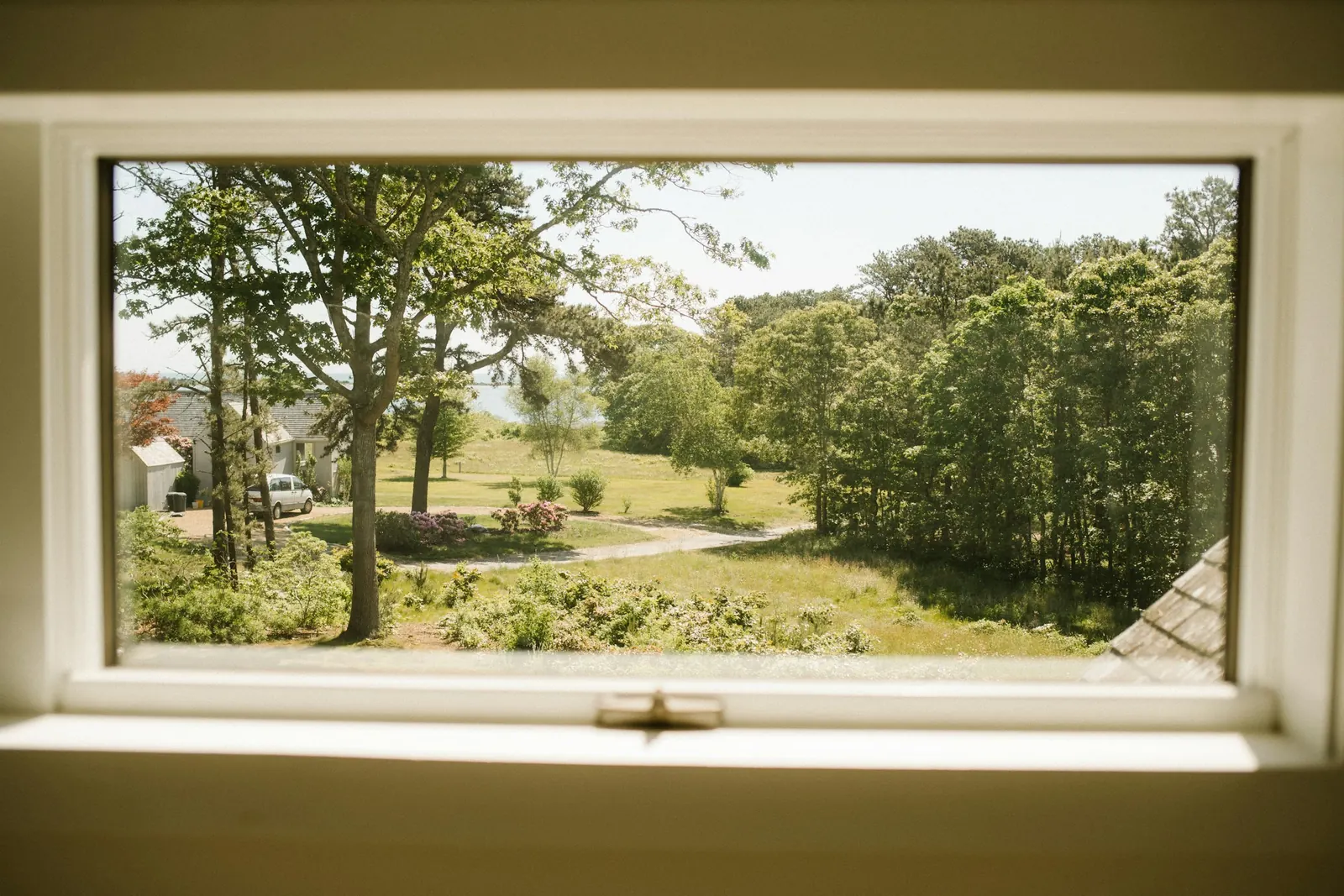
Look out of the nearest window at a tree, or picture one if there isn't one there. Green leaves, brown bark, a shape against the sky. It seems as solid and obvious as anything could be.
Now consider what is actually reaching you. Light of various wavelengths bounces off the tree and enters your eyes. Your retina converts it into electrical signals. Your brain processes those signals and produces the experience of a green, leafy, three-dimensional tree.
The wavelengths are not green. Green is something your visual system adds. So which parts of the tree you see are the tree, and which parts are you?
Some scientists now argue that the honest answer is: almost none of it is the tree. Not because the tree isn't there, but because evolution never needed to show you what it really is.
Start with that argument, then what perception scientists already agree on, the strange experiments with split brains, and the oldest version of the idea, which is about 2,400 years old. After all that, what, if anything, can we be sure of?
The idea grabbed me when I applied it to something I love. I wrote down:
"…perhaps a forest is our representation of the peace and supplication we experience from the thing in itself"
What Perception Scientists Already Agree On
Much of this isn't controversial.
Color is the clearest example. Light has wavelengths; it has no color. The experience of red or green is built by the brain from the responses of three types of cone cells in the eye. Other animals, with different cells, see the same scene differently.
A stick dipped halfway into water looks bent, even when you know it is straight. Two lines of equal length look unequal when arrows are added to their ends. These illusions persist even after they are explained, because perception isn't a camera. It is the brain's best guess about the causes of its signals.
So the question isn't whether perception constructs reality. It does. The question is how closely the construction resembles what is out there.
Fitness Beats Truth
The cognitive scientist Donald Hoffman, at the University of California, Irvine, takes the most radical position. In his 2019 book The Case Against Reality, he argues that natural selection favors perceptions that are useful for survival, not perceptions that are accurate.
He and his colleagues ran simulations of evolutionary games in which organisms that saw the true structure of the world competed against organisms that saw only what mattered for fitness. In their models, the organisms tuned to fitness consistently won. Hoffman calls the result "fitness beats truth."
His analogy is a computer desktop. The blue icon for a file is not blue, rectangular or located at the corner of anything inside the computer. It is a useful simplification that hides an enormous amount of complexity. Perception, on this view, is the same kind of interface.
He is careful to say that this doesn't mean you can ignore the icons. You should still step out of the way of a train. You just shouldn't assume the train looks the way it does because that's what it is.
Not everyone accepts the conclusion. Critics argue that the simulations are too simple, and that in the real world, perceptions that help an animal survive usually do track something true, such as distance, size or timing. A gazelle that misjudges how far away the lion is will not last long. The debate is about how much of what we see is faithful structure and how much is convenient decoration, and it is not settled.
The idea itself is older than evolution. In 1781 Immanuel Kant argued that we only ever know things as they appear to us, never the thing in itself. Hoffman's version adds a reason why: evolution had no use for the thing in itself.
The Ant and Us
Think about how a human looks to an ant: probably not much more than a large, unpredictable obstacle. The ant has no access to the inner life we know we have.
That suggests a humbling question: what if the things we see are hiding equally complex inner workings from us? I put it this way:
"Forest in itself is probably only experience-able by the forest itself. The first person nature of consciousness dictates this."
The Brain That Explains After the Fact
Neuroscience adds another layer, about how we see ourselves.
In split-brain patients, whose brain hemispheres have been surgically separated to treat severe epilepsy, the neuroscientist Michael Gazzaniga found that the left hemisphere would confidently invent explanations for actions actually triggered by the right hemisphere, which it had no information about. He called this system the "interpreter."
In one well-known case, a patient's right hemisphere was shown a snowy scene and the left hemisphere a chicken claw. The left hand, controlled by the right hemisphere, picked a picture of a shovel. Asked why, the speaking left hemisphere, which had never seen the snow, explained without hesitation that the shovel was for cleaning out the chicken shed.
It made me wonder how far that goes:
"Given what we know about quantum mechanics plus left hemisphere justifying right hemisphere actions after the fact, is human civilization just built on one big illusory lie?"
I wouldn't go that far now. But it does show that the stories we tell about our own minds are constructed too.
What Remains
Plato described prisoners chained in a cave who had seen only shadows on a wall and took them for the real world. The image has lasted because it still fits.
Yet every version of the argument relies on the same fact: illusions appear to someone. Whatever the tree is in itself, the experience of seeing it is undeniably happening. After a long time going back and forth on this, one of the plainest notes I wrote was:
"Perhaps fundamentally the lesson is one can't find consciousness"
It can't be found among the icons because it is what the icons appear to.
So, the next time you look at that tree, which part of what you're seeing do you think belongs to the tree, and which part belongs to you?
Like and share
Keep Reading
- Blog
- Original
Mary Knew Everything About Red. Then She Saw It
A scientist who has studied every wavelength and cone cell steps out of a black-and-white room and sees a rose. Philosophers have fought over this for decades. I think they've been fighting about the wrong thing.
- Blog
- Original
Your Brain Is Lying to You Right Now. The Question Is Who's Listening
Invented reasons. Edited timelines. A color that isn't in the light at all. Neuroscience keeps catching the brain in the act, and every con needs an audience.
- Blog
- Original
Your Brain Is Made of Things That Feel Nothing. So Why Do You?
Every neuron in your head runs on chemistry that doesn't feel a thing. Put roughly 86 billion of them together and you get the sting of cold wind on your face. Nobody can say where the feeling comes in.
Join the discussion
Comments