
- Blog
- Original
- Psychology
- Ego & Self
Your Brain Can Adopt a Rubber Hand in Minutes. What Else Did It Adopt?
Two paintbrushes and a fake hand are enough to make people react as if an object were part of their body. If ownership can be rewired that fast, the feeling of being you deserves a closer look.
"For my part, when I enter most intimately into what I call myself, I always stumble on some particular perception or other, of heat or cold, light or shade, love or hatred, pain or pleasure. I never can catch myself at any time without a perception, and never can observe any thing but the perception."
— David Hume, A Treatise of Human Nature (1739)
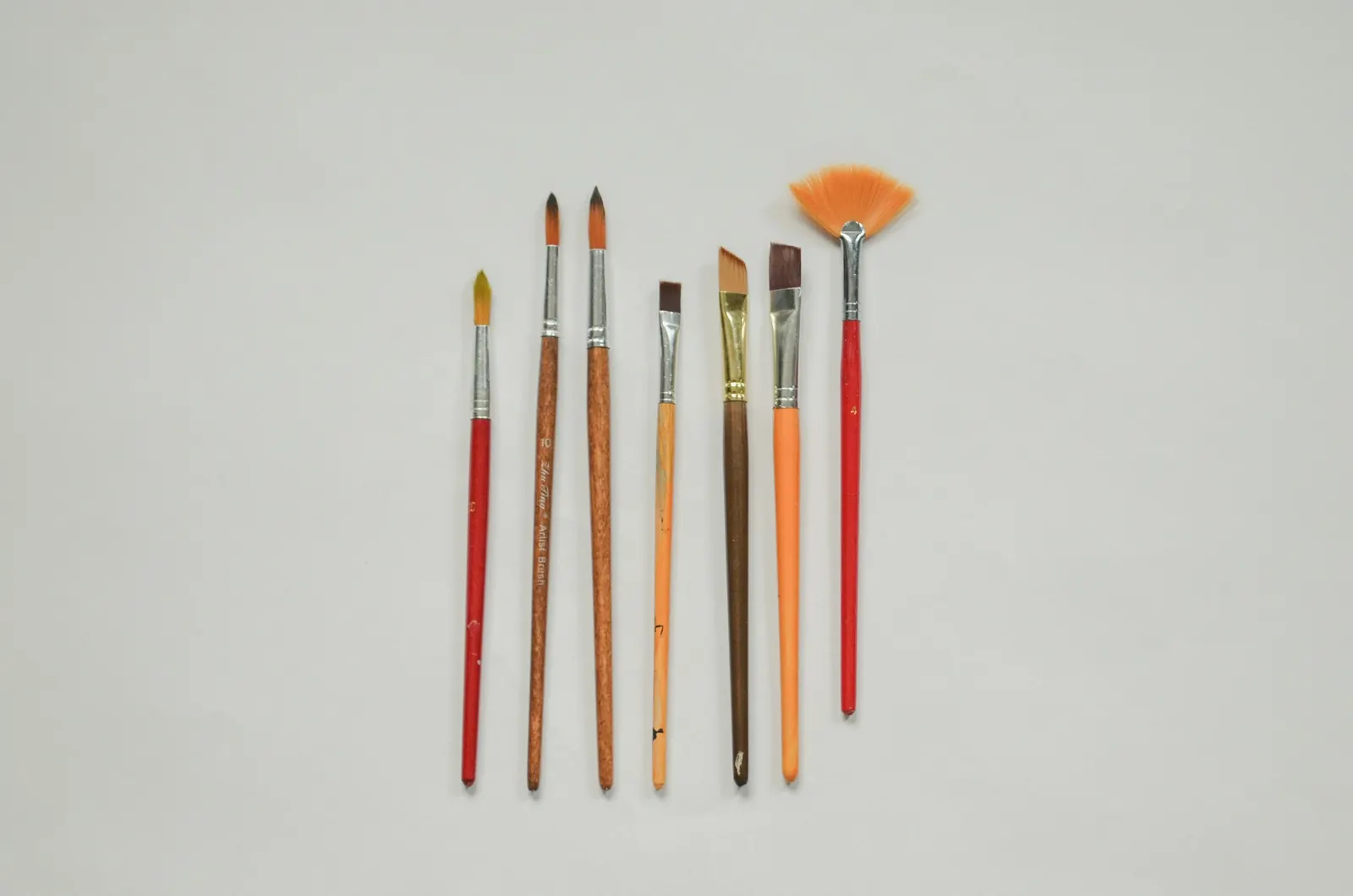
Sit at a table and rest your left hand on it, hidden behind a small screen. In front of you, where your hand could plausibly be, someone places a rubber hand. Then they take two paintbrushes and stroke the rubber hand and your hidden hand at exactly the same time, in exactly the same places.
Within minutes, many people begin to feel the brushing on the rubber hand. Some report that the fake hand feels like theirs. In later versions of the experiment, when the rubber hand was suddenly threatened, people showed a measurable stress response, as if their own hand were in danger.
Nothing about your body changed. What changed was your brain's model of where your body ends. And it updated that model in minutes, on the basis of a paintbrush.
That raises an uncomfortable question. If the sense of "this is my hand" can be rebuilt so easily, how much of the sense of "this is me" is built the same way?
The experiments come first, then the philosophers who argued the self is a construction, and the contemplative traditions that reached the same conclusion centuries earlier. Then the real question: what, if anything, is left once the construction is seen for what it is?
The question first took shape for me as a plain puzzle:
"Why do we have an illusion of self or separation from the cosmos? Why is there a view that there is a universe out there we must explore, when we are literally part of the universe at the most literal level?"
The Hand That Wasn't Yours
The rubber hand illusion was published in Nature in 1998 by Matthew Botvinick and Jonathan Cohen. The key ingredient is timing. When what you see and what you feel happen together, the brain merges them and assigns ownership to whatever it sees being touched. When the strokes are out of sync, the illusion mostly fails.
In 2007, two research groups, one led by Henrik Ehrsson and another including Olaf Blanke and Thomas Metzinger, extended the trick to the whole body. Using cameras and virtual reality headsets, they gave volunteers a view of their own body from behind. With synchronized touch, people reported feeling located partly outside their physical body, toward the virtual one.
The lesson is that bodily ownership and even your felt location are not simply given. They are inferences the brain makes and keeps updating. Most of the time the inferences are good enough that you never notice them being made. It takes a carefully arranged mismatch, a fake hand or a camera feed, to catch the brain in the act.
Looking for the One Who Looks
Philosophers reached a similar conclusion long before the experiments.
In 1739 David Hume tried to find his self by introspection. He found sensations, thoughts and feelings, but never a separate thing having them. He concluded that the self is a bundle of perceptions, not an owner standing behind them.
The modern version comes from the philosopher Thomas Metzinger, whose 2003 book Being No One argues that what we call the self is a model the brain builds of the organism, one so seamless that we cannot recognize it as a model. We don't experience the model. We experience being it.
Buddhism made a closely related claim more than two thousand years ago with the teaching of anattā, often translated as "not-self." Look for a permanent self in the body, feelings, perceptions, thoughts or consciousness, the teaching says, and you won't find one.
What the Brain Is Doing
Neuroscience has found networks involved in this self-modeling. One of them, the default mode network, is most active when the mind wanders, thinks about itself, replays the past and rehearses the future.
In a 2011 study in PNAS, Judson Brewer and colleagues found that experienced meditators showed reduced activity in key parts of this network during meditation compared with beginners. It doesn't prove that the self is an illusion. It does suggest that the sense of a narrating self can be turned down by training.
The Model and the Light
This is where I think the usual conclusion goes too far.
"The self is an illusion" can mean two very different things. It can mean that the story of a separate, continuous person, with a fixed core sitting behind the eyes, is a construction. The evidence supports that strongly.
Or it can mean that there is no experience at all, that nothing is aware. That doesn't follow. An illusion has to appear to something. When the rubber hand feels like yours, the feeling is false about the hand, but the feeling itself is undeniably happening.
So the experiments take apart the content of the self model. They leave the awareness in which that model appears exactly where it was.
Speaking in the Third Person
That distinction explains something I noticed in religious and contemplative texts, where enlightened teachers often seem to talk about themselves from a distance. I asked:
"Is that why some spiritual traditions are depicted as speaking in third person? Because to the ultimate subject, all is process, even the illusion of self?"
If the personal self is a process, it can be observed like any other process, by an awareness that is not itself one more item in the model. That seems to be what Hume could not find when he looked for himself. He was looking for an object, and awareness is not one.
The self you picture when you think "me" appears to be a model, built and maintained by the brain much as it built ownership of a rubber hand. What notices the model is a separate question, and the experiments don't touch it.
Like and share
Keep Reading
- Blog
- Original
Everything You Own Has an Owner. Nobody Has Ever Found It
My hands, my brain, my thoughts. In 1739 David Hume went looking for the one all of it belongs to and kept tripping over something else. You can run the same search tonight.

- Blog
- Original
You Can Control Your Thoughts. Now Find Who's Doing It
Self-help is right: you can take charge of your mind. But every controller you find has another one standing behind it, and neuroscience only makes the line longer. Where does it stop?

- Blog
- Original
You Made a Choice Today. Your Brain Moved First
In 1983 a scientist asked volunteers to flick their wrist whenever they felt like it. Their brains began preparing before they knew they had decided. Forty years later, what that measured is still being argued about.
Join the discussion
Comments